
Chicken Coop Size Guide

The simplest way to keep hens calm, healthy, and productive is to avoid overcrowding. Here’s a beginner-friendly sizing plan for the coop, run, roosts, and nesting boxes.
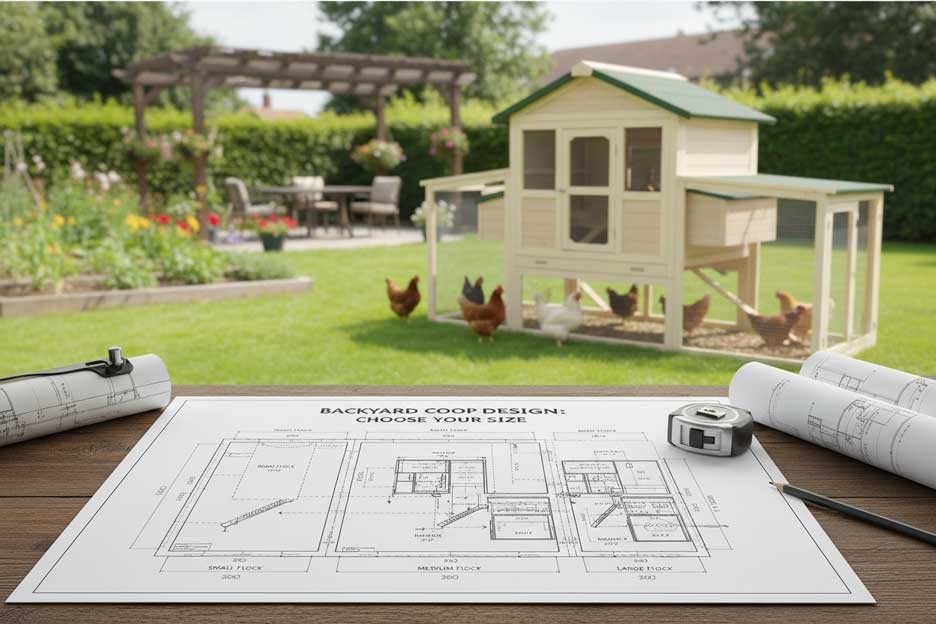
Chicken coop and run in a calm suburban backyard

Most “4-hen coops” sold online are sized for occasional use (or very small bantams). In real backyards, undersized coops lead to stress, pecking, dirty eggs, and more illness.

This guide focuses on practical sizing rules that keep a small suburban flock peaceful and low-maintenance.

Quick Rule of Thumb

  • Inside coop: 4 sq ft per standard hen (minimum)
  • Run: 8–10 sq ft per standard hen (minimum)
  • Roost space: 8–10 inches per hen
  • Nesting boxes: 1 box per 3–4 hens

If your hens are confined often (winter, rain, predators), size up.
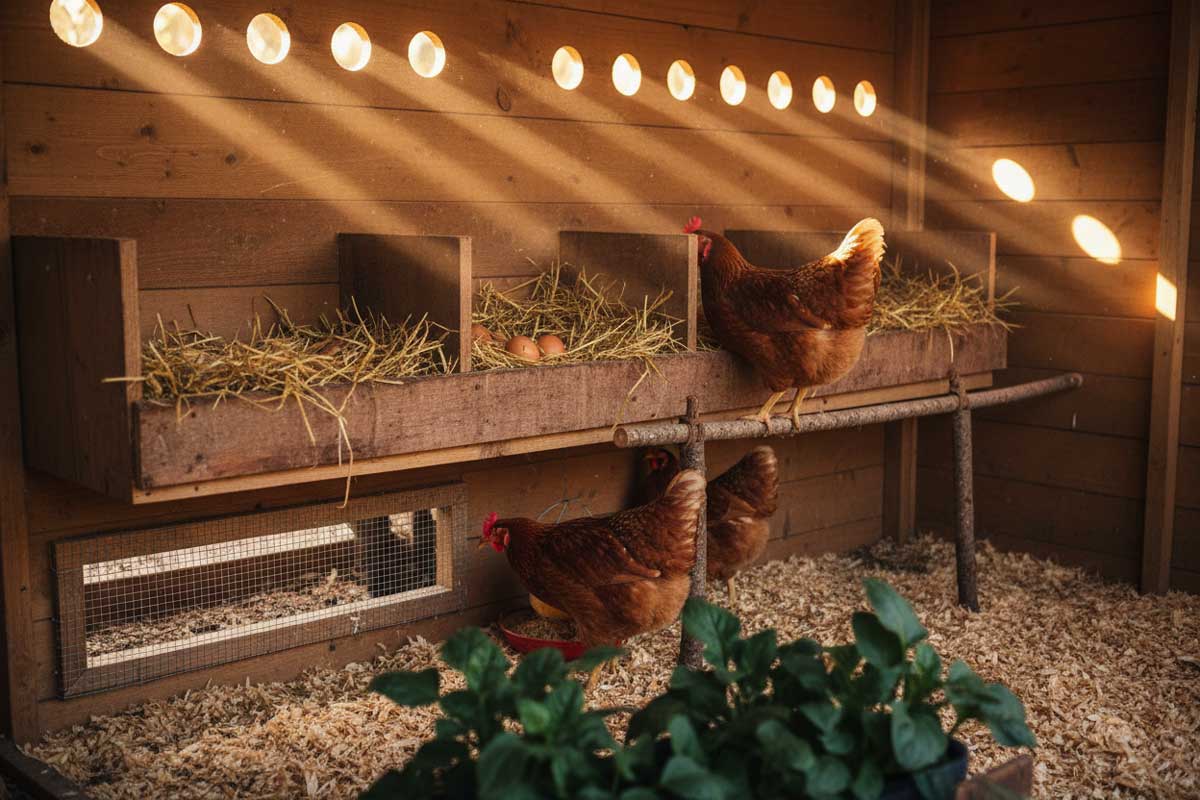
1) How Much Coop Space Per Hen?

Inside of a chicken coop showing roosts and ventilation

Inside the coop is for sleeping, laying eggs, and escaping weather. It should feel dry, draft-free, and not cramped.
Recommended minimums

  • Standard hens: 4 sq ft per bird inside the coop
  • Large breeds: 5–6 sq ft per bird
  • Bantams: 2–3 sq ft per bird

When to size up

  • ✔ You’ll keep hens confined in bad weather
  • ✔ You live in a wet/cold climate (more time inside)
  • ✔ You want calmer flock behavior with fewer conflicts

2) How Big Should the Run Be?

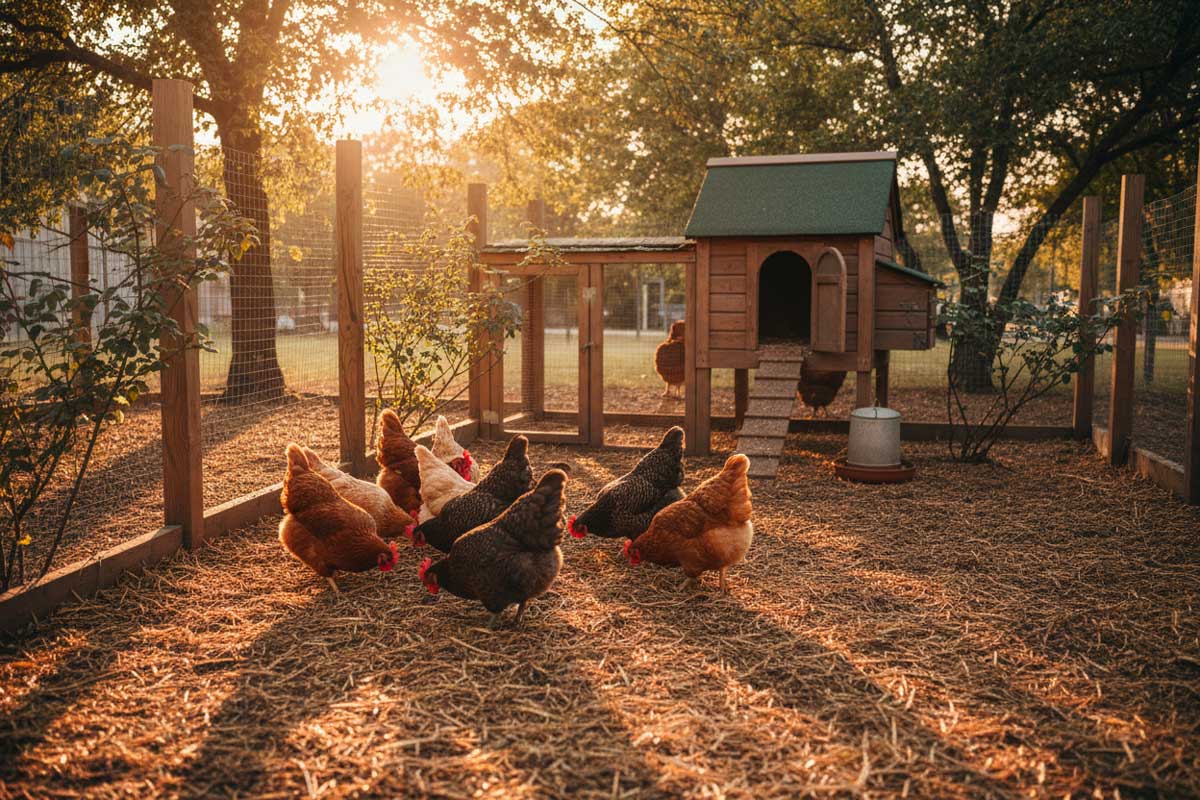
Chicken run space with hens walking and scratching

The run is where your flock spends most of its awake time if free-ranging isn’t possible. More run space usually means fewer behavior issues.
Recommended run space

  • Standard hens: 8–10 sq ft per bird
  • Large breeds: 10–12 sq ft per bird
  • If no free-range: Aim for the higher end

Common run mistakes

  • ✘ Run is too small (boredom, feather pecking)
  • ✘ Predators can dig under (add a skirt or buried barrier)
  • ✘ No shade/cover (heat stress)

3) Roost Space and Nesting Boxes

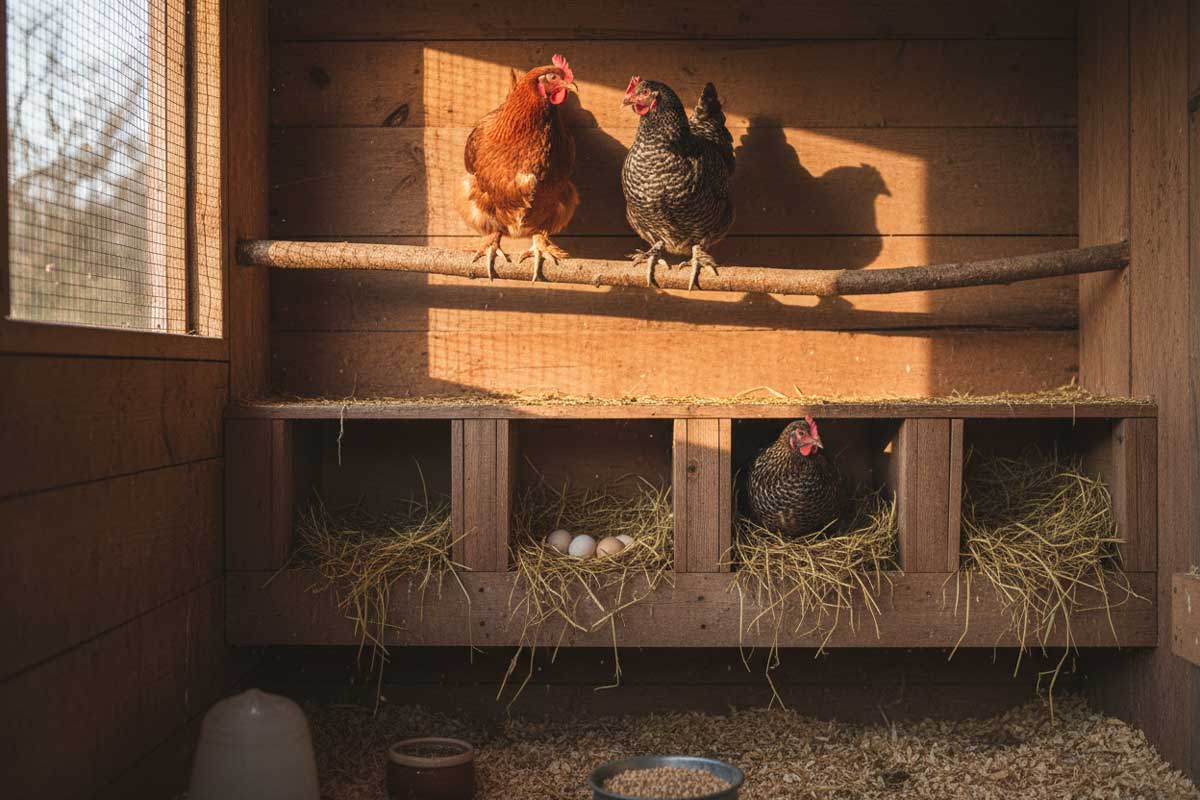
Roost bars and nesting boxes inside a coop (placeholder)

Roosts

  • 8–10 inches per hen (standard breeds)
  • Use flat-ish roosts (2x4 with wide side up) for comfort in cold climates
  • Keep roosts higher than nesting boxes so hens don’t sleep in the boxes

Nesting boxes

  • 1 nesting box per 3–4 hens
  • Boxes should feel private/dim
  • Easy access for egg collection keeps eggs cleaner

Recommended Sizes by Flock Size

Standard Hen Sizing

  • 2 hens: 8 sq ft coop + 16–20 sq ft run
  • 4 hens: 16 sq ft coop + 32–40 sq ft run
  • 6 hens: 24 sq ft coop + 48–60 sq ft run
  • 8 hens: 32 sq ft coop + 64–80 sq ft run

These are “peaceful baseline” numbers. If you have space, going bigger almost always makes ownership easier.

Common Coop Sizing Mistakes (and How to Avoid Them)

Calm Backyard Setup Recommendation

If you’re starting with 4 hens, aim for a coop that comfortably supports 6. It’s a small cost increase that usually improves flock behavior and reduces maintenance.

Ready to Pick a Coop?

If you’re buying a kit, prioritize realistic capacity, ventilation, and predator protection. Here are our top picks for a beginner flock.

See Best Coop Kits for 4 Hens