
Feeding Chickens: A Complete Beginner Guide

Feeding shouldn’t be complicated. This guide breaks down what to feed at each life stage, how to avoid common mistakes, and how to keep feeding clean and low-waste.
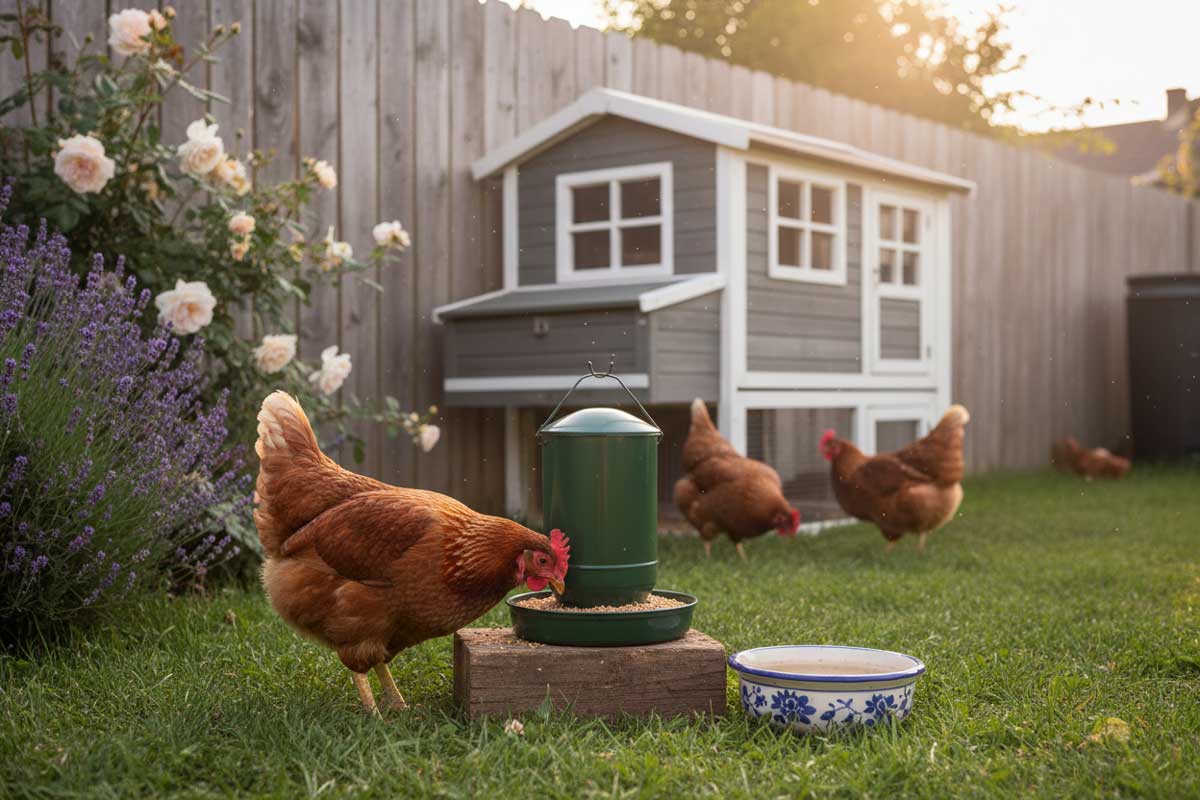
Chickens eating from a feeder in a calm backyard

Most backyard flocks do best on a simple foundation: a quality balanced feed, clean water, and a clean feeder setup. Everything else (scratch, treats, table scraps) should be a small bonus — not the main diet.
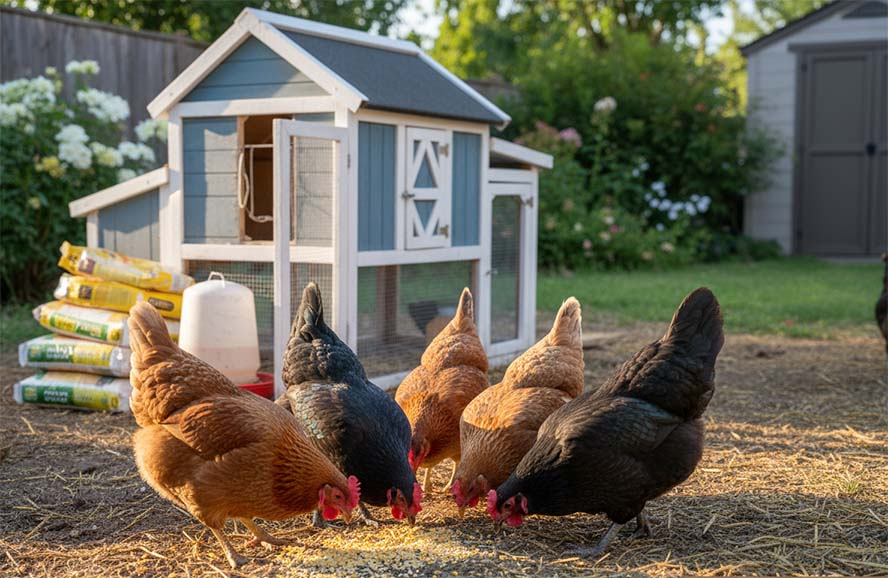
Quick Feeding Basics

  • Primary diet: Age-appropriate balanced feed
  • Always: Clean water available
  • Calcium: Offer separately for laying hens (oyster shell)
  • Grit: Needed if they eat anything besides crumbles/pellets
  • Treat limit: Keep extras under ~10% of intake

1) What to Feed (By Age)

Chicks eating starter crumble

The biggest beginner mistake is feeding “layer feed” too early. Chicks need different nutrition than laying hens.
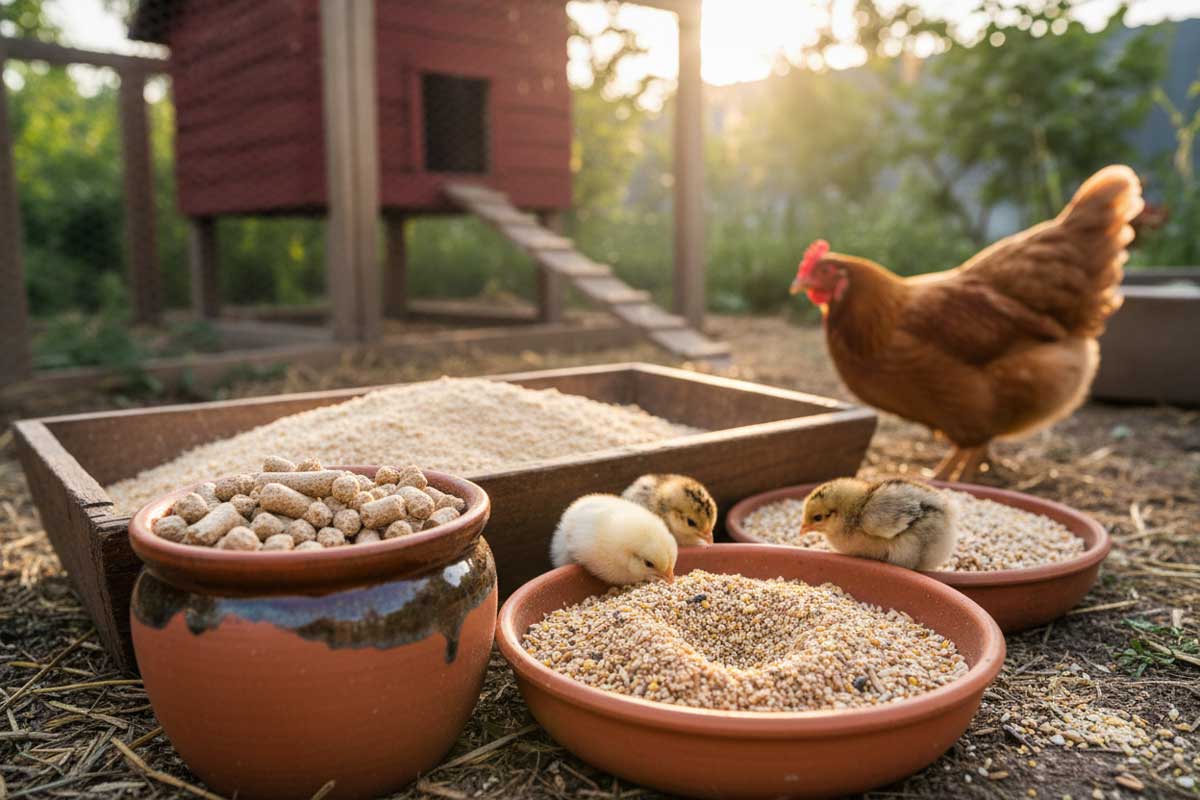
Chicks (0–6/8 weeks): Starter

  • Feed: Chick starter crumble
  • Goal: steady growth + healthy feathering
  • Tip: keep feed fresh and dry

Growers / Pullets (6/8–16/18 weeks): Grower

  • Feed: Grower feed (balanced for growth)
  • Goal: strong body development before laying begins

Laying Hens (16/18+ weeks): Layer Feed

  • Feed: Layer pellets/crumbles
  • Offer: calcium separately (oyster shell) as needed

2) Pellets vs Crumbles vs Mash

Different chicken feed forms: crumble, pellet, mash

Crumbles

  • ✔ Great for chicks and smaller birds
  • ✔ Easy to eat
  • ✘ Can be messier if feeders are shallow

Pellets

  • ✔ Usually less waste
  • ✔ Good for adult layers
  • ✘ Some hens prefer crumbles

Mash

  • ✔ Can be mixed with warm water in winter
  • ✘ Spoils faster and can get messy

For most backyard flocks: crumbles for chicks, then pellets or crumbles for layers depending on waste and preference.

3) Water: The Hidden Key to Egg Production

If egg production drops suddenly, water is one of the first things to check. Even mild dehydration impacts laying.

Simple Tip That Reduces Mess

Place water and feed under a covered area of the run to keep it drier and cleaner through wet seasons.
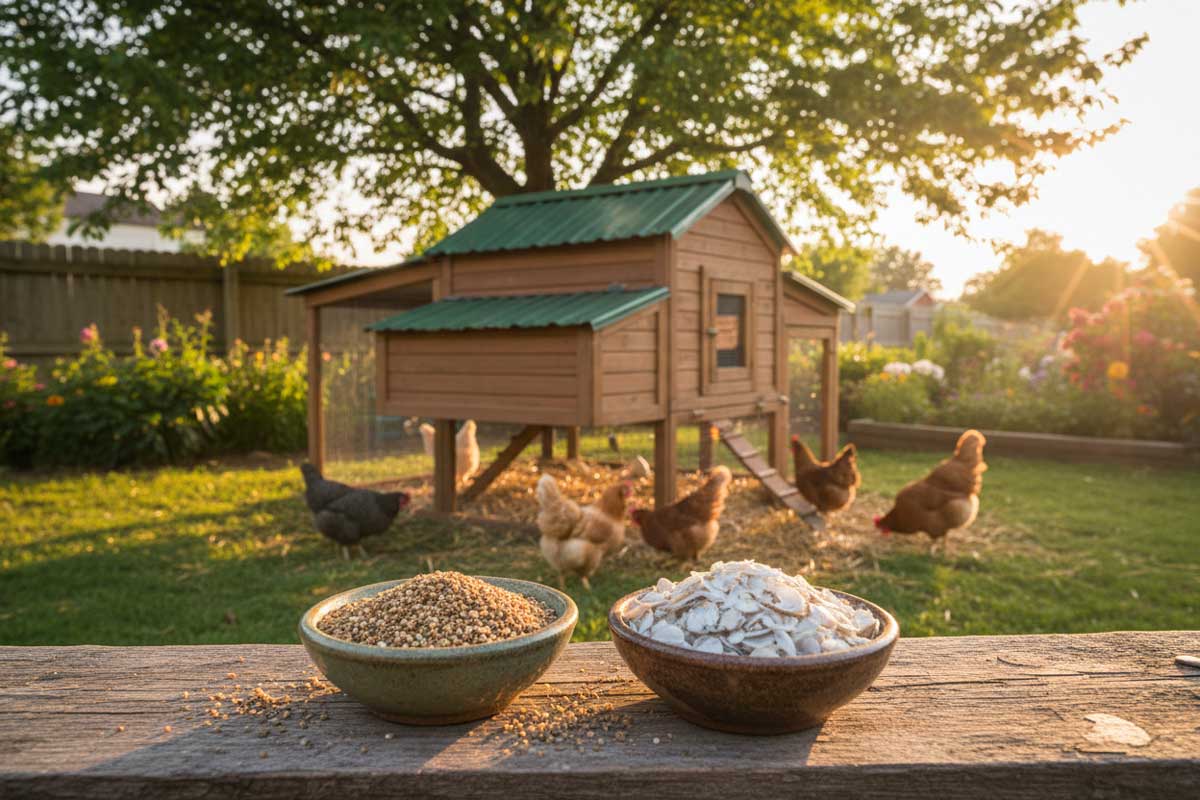
4) Grit and Calcium (What They Are, When You Need Them)

Small containers of grit and oyster shell for laying hens

Grit

Chickens don’t have teeth. Grit helps them grind foods like greens, bugs, and scratch in their gizzard.

  • Provide grit if your chickens eat anything besides feed pellets/crumbles.
  • Offer it in a small separate dish so they can self-regulate.

Calcium (Oyster Shell)

Laying hens need extra calcium to maintain strong shells. Don’t force it—offer it free choice.

  • Offer oyster shell separately once hens are laying.
  • Soft shells often improve quickly when calcium is available.

5) Treats, Scratch, and Kitchen Scraps

Treats are fine—just keep them as a small part of the diet so hens still eat balanced feed.

Beginner Rule

Aim for 90% balanced feed, 10% extras. If treats replace feed, you’ll often see poorer laying and messier coops.
Good treat options

Avoid / limit

6) A Clean Feeding Setup (Less Waste, Fewer Rodents)

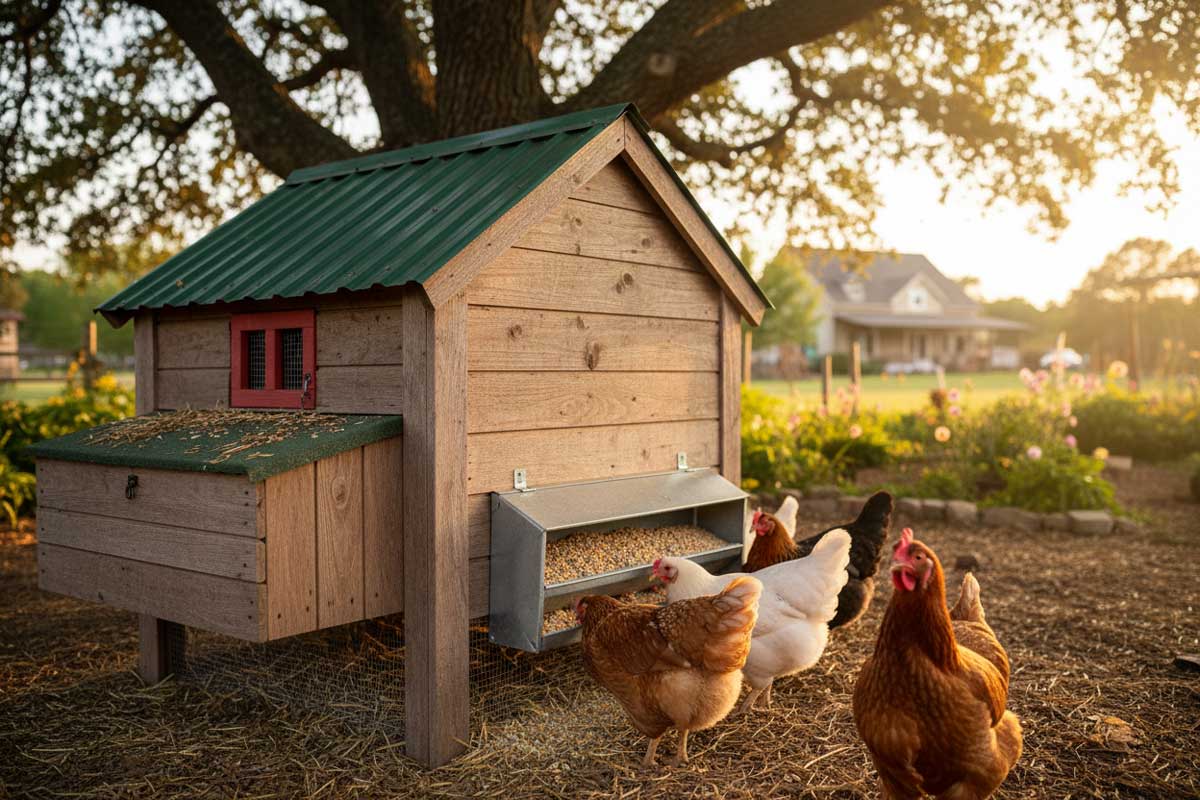
Chicken feeder hanging or mounted to reduce waste

The feeder matters more than most beginners expect. Spilled feed attracts rodents and drives up costs.

What to look for in a feeder

  • ✔ Helps prevent scratching feed out
  • ✔ Easy to refill and clean
  • ✔ Weather protection if kept outdoors
  • ✔ Appropriate capacity for your flock

If you want the easiest setup, pick a feeder designed to reduce waste.

See Best Chicken Feeders

Common Feeding Mistakes

When in Doubt

Keep it simple: a quality balanced feed, clean water, and a feeder that minimizes waste. That alone solves most feeding issues.

Next Step: Check Your Coop Setup

Feeding gets easier when housing is clean and well-ventilated. If you’re still choosing your coop:

See Best Coop Kits for 4 Hens